
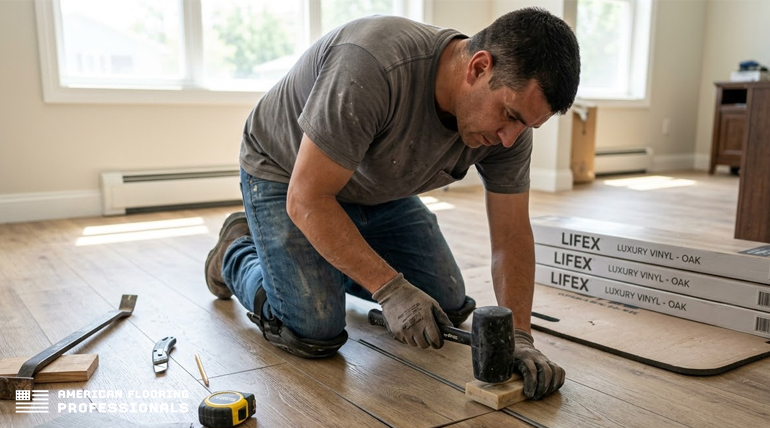
You need to stop vinyl floor buckling before your beautiful home renovation turns into a very expensive and stressful disaster. Every homeowner must prevent floor peaking and halt plank tenting to ensure their living space remains safe and looks great.
Expansion gaps are not an optional suggestion because they provide the essential breathing room required for floating floor movement stability. When temperature changes occur, your planks need space to grow or they will eventually push against your solid drywall.
This physical pressure creates those ugly peaks in the middle of your room that make walking very difficult for everyone. You must understand that a floating floor is a living system that responds to the environment inside your busy house.
Ignoring these basic installation rules leads to structural failure that could easily have been avoided with just a little planning. Learning how to fix these issues right now will save you thousands of dollars in professional repair costs later on.
Let us dive into the technical reasons why your floor is currently fighting for space against your rigid interior walls.
Troubleshooting Floor Tenting: Why Your LVP Is Pushing Back
Direct sunlight and sudden humidity spikes force your vinyl planks to grow much larger than their original manufactured box size. Identifying fixed points like heavy kitchen cabinets or door frames helps you find where the floor acts like an anchor.
You can perform a simple tapping test to see if your floor is physically trapped against the hard perimeter drywall. A healthy vinyl plank expansion gap allows the entire floor system to shift slightly without hitting any hard vertical obstructions.
If you hear a hollow thud or feel significant resistance, your flooring perimeter gap has likely disappeared completely over time. You must address these pressure points immediately to stop vinyl floor buckling and stop vinyl floor buckling before damage happens.
Thermal expansion limits are real factors that every modern installer must respect when laying down a brand new vinyl floor. Without a proper gap, the kinetic energy from expanding planks has nowhere to go but straight up into the air. This creates a dangerous tripping hazard that ruins the aesthetic appeal of your carefully designed and decorated living room space. Understanding the science of floating floor movement is the first step toward achieving a perfectly flat and stable surface.
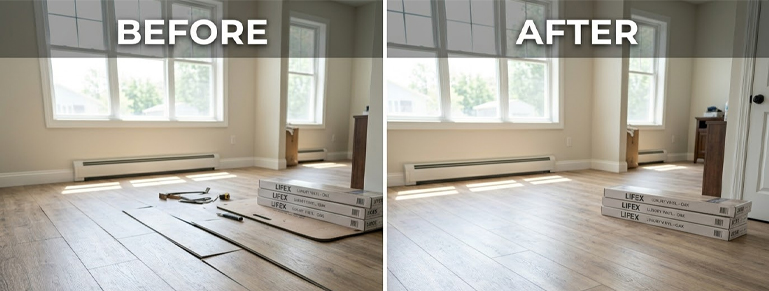
The Emergency Trim: How to Create a Perimeter Gap on Installed Floors
Removing your baseboards and quarter-round molding carefully ensures that you do not cause any unnecessary damage to your painted walls. Using an oscillating multi-tool allows you to shave the edges of installed planks while they stay on the subfloor safely.
You should follow the standard 1/4-inch spacing rules to give your vinyl flooring tenting repair the best chance of success. The 2026 pro tip involves using 6mm spacers to ensure consistent gaps before you finally decide to reinstall your trim.
Trimming the floor while it is still laid down requires a very steady hand and a high-quality sharp cutting blade. You must create a uniform path around the entire room so the floor can breathe during the hot summer months.
This emergency fix allows the planks to settle back down into their flat position once the side pressure is released. Active voice techniques help you take control of the repair process without needing to hire an expensive flooring contractor today. Always wear safety goggles while cutting to protect your eyes from small flying pieces of plastic or wood debris. Giving your floor the space it deserves ensures that it will stay flat and beautiful for many more years.
Closing the Gap: Tools for Repairing Horizontal Separations
Using a heavy-duty suction tool helps you pull separated short-end gaps back together without needing to take the floor apart. You might need to use specialized click-lube to help stubborn locking mechanisms slide back into their original intended position.
The famous blue tape trick secures repaired planks while the locking system settles into place over the next few hours. Fixing horizontal separations requires patience because you are dealing with the delicate integrity of the factory-milled tongue and groove.
Adhesive plank grabbers provide extra leverage when you are working in tight corners or underneath heavy pieces of fixed furniture. You must ensure that the subfloor is perfectly clean before you try to slide the planks back into their spots. Any trapped dirt or grit will prevent the locking system from engaging fully and staying closed during heavy foot traffic.
Successful repairs depend on using the right tools for the job instead of trying to force the planks with hammers. Taking your time during this phase of the project prevents you from damaging the visible surface of your expensive flooring.
Once the gaps are closed, your floor will look seamless and professional just like the day it was installed.
Conclusion: Future-Proofing Your Floating Floor
A proper 1/4-inch gap is the absolute difference between a lifetime warranty and a very frustrating total floor system failure. We highly recommend a 48-hour acclimation period for all future repair sections to prevent recurring movement in your home.
Ensuring that your subfloor is level and dry will further protect your investment from the common issues of floor buckling. Vinyl flooring remains an incredible choice for modern homes as long as you respect the basic rules of proper installation. You now have the knowledge and the tools to fix your expansion gaps and restore the beauty of your floor. Stop the damage today by taking action and giving your planks the room they need to expand and contract naturally.
Your home will feel much more comfortable and your flooring will last significantly longer with these simple but effective tips. Maintenance is the key to longevity when it comes to any type of floating floor system in a busy house. Thank you for taking the time to learn how to care for your home with these expert flooring repair strategies. Your floor will thank you by staying flat, quiet, and beautiful for every guest who walks through your door.
If you want to know more about flooring, follow us on Instagram or contact us for a free quote!.